
The problem: a floor that rubs off
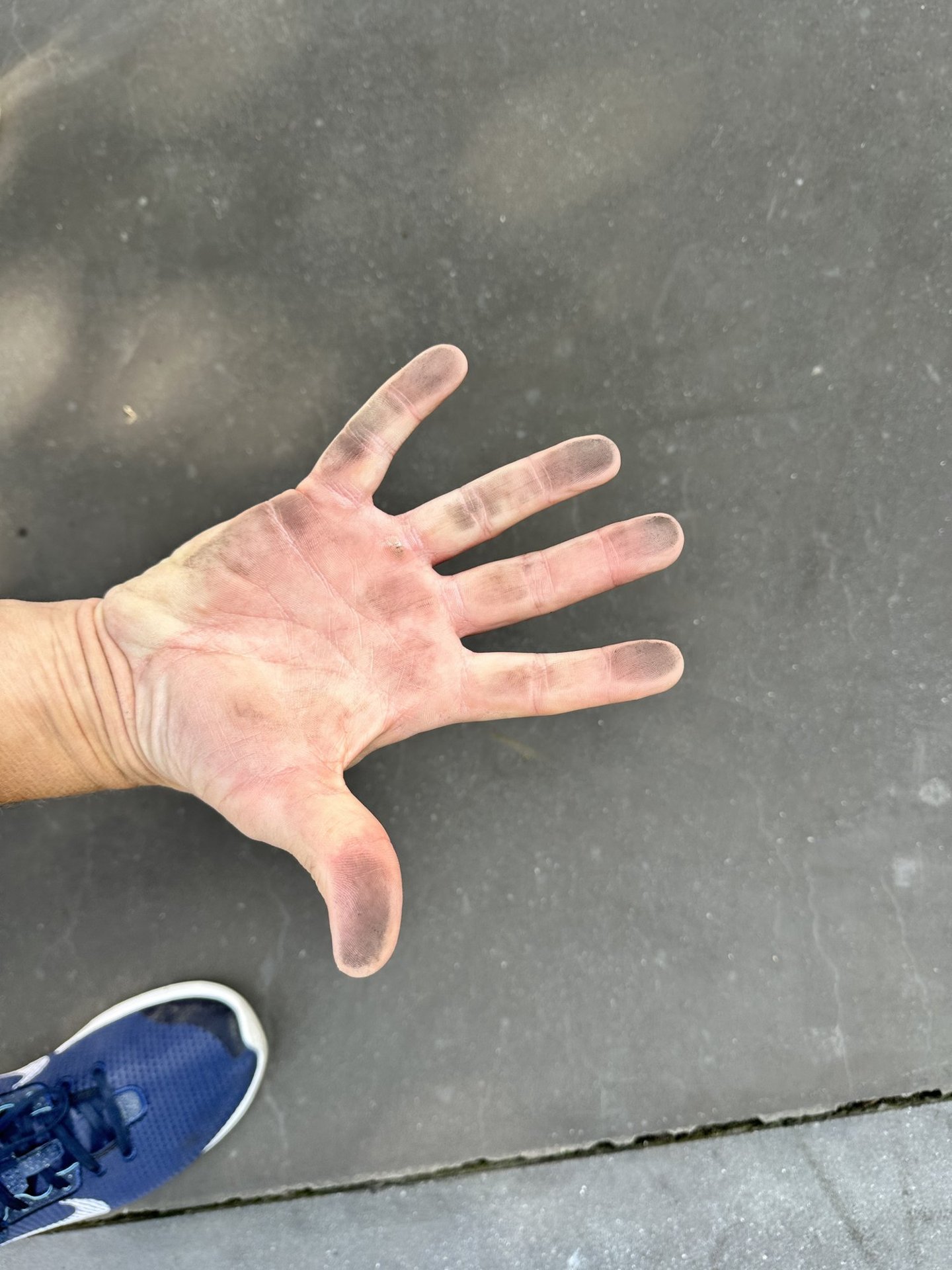
Coloured concrete is popular in the Netherlands. Many terraces and residential concrete floors are poured or finished in anthracite, grey or black, and they look great when they are new. But after some time a lot of owners notice that the floor starts to rub off. Bare feet turn black, children come in with dark hands and knees, and the pigment is walked through the whole house. It is not a cleaning problem: you can scrub every week and it keeps releasing colour, because the pigment is coming out of the concrete itself.
Why coloured concrete releases pigment
- A weak top layer. When too much water rises to the surface during finishing, it leaves a thin, weak, dusty layer that wears quickly and takes the pigment with it.
- Colour all the way through. In recent years more and more terraces and floors in the Netherlands are made with concrete that is coloured all the way through. Especially with this type of concrete, pigment often comes to the surface over time. Floors where a pigmented dry-shake is worked into the surface usually suffer less from this problem.
- Pigment that does not bind well. Very fine black carbon-based pigments do not bond as firmly as iron oxide and can work their way out, especially outdoors.
- Too much pigment, which weakens the cement paste.
- Weather and wear. Rain, sun, frost and foot traffic slowly open the surface.
Why typical fixes often fail
Coatings form a film that wears, scratches and can peel outdoors. Wax, oil and simple sealers must be reapplied regularly. Water-repellent impregnation keeps water out, but does not make a weak top layer stronger. In practice, the black feet come back.
Our approach: strengthen first, then protect
First we remove the weak top layer by polishing with coarse diamonds. On very porous concrete we impregnate before polishing: we clean the surface thoroughly and apply decoSIL once or twice, depending on how easily the concrete absorbs it. This strengthens the top layer first. Without this step you risk polishing away too much of the surface, which exposes the sand and stone and gives a ‘salt and pepper’ or even terrazzo look. In total we always impregnate at least twice with decoSIL. decoSIL is a liquid hardener with lithium silicates and colloidal silica. It penetrates and reacts with the free lime in the concrete, creating a harder, denser surface that no longer dusts. After further polishing we finish with decoSTAINSTOP, a breathable, penetrating sealer that protects against stains, is UV-resistant and will not peel like a coating.
Step by step:
- Clean the surface thoroughly.
- Strengthen: impregnate with decoSIL (at least twice in total).
- Polish with coarse diamonds to remove the weak top layer.
- Protect: finish with decoSTAINSTOP.
Case: private house in Uden
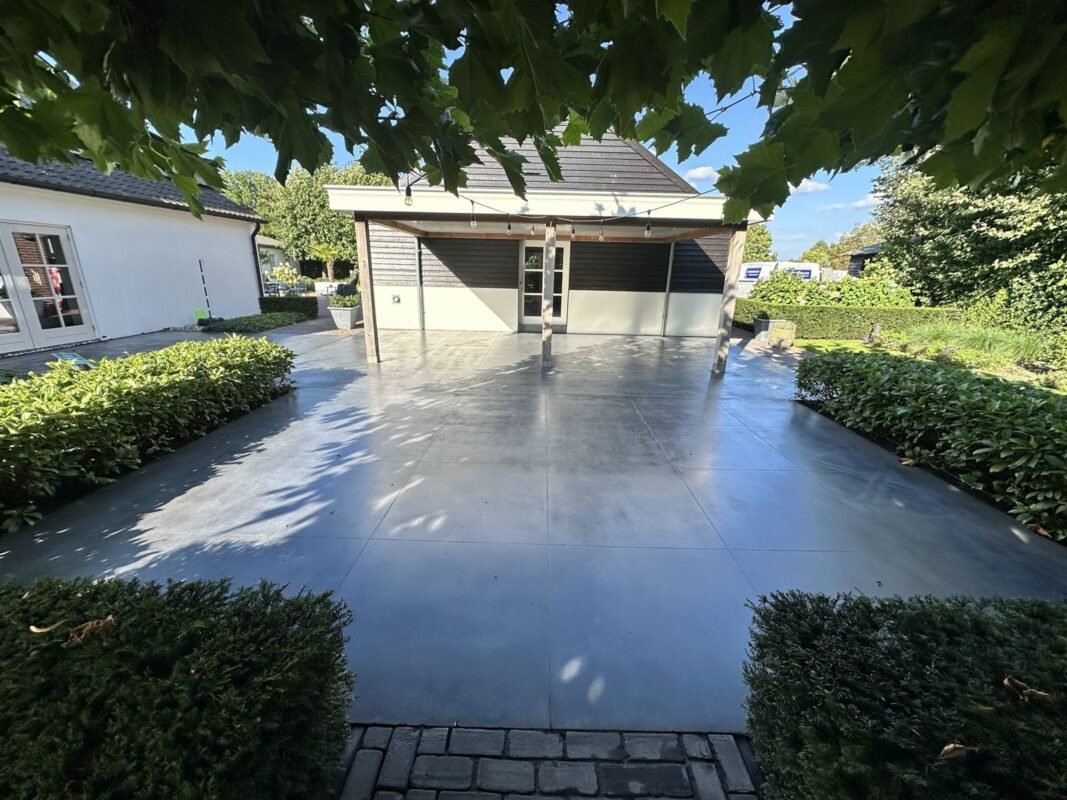
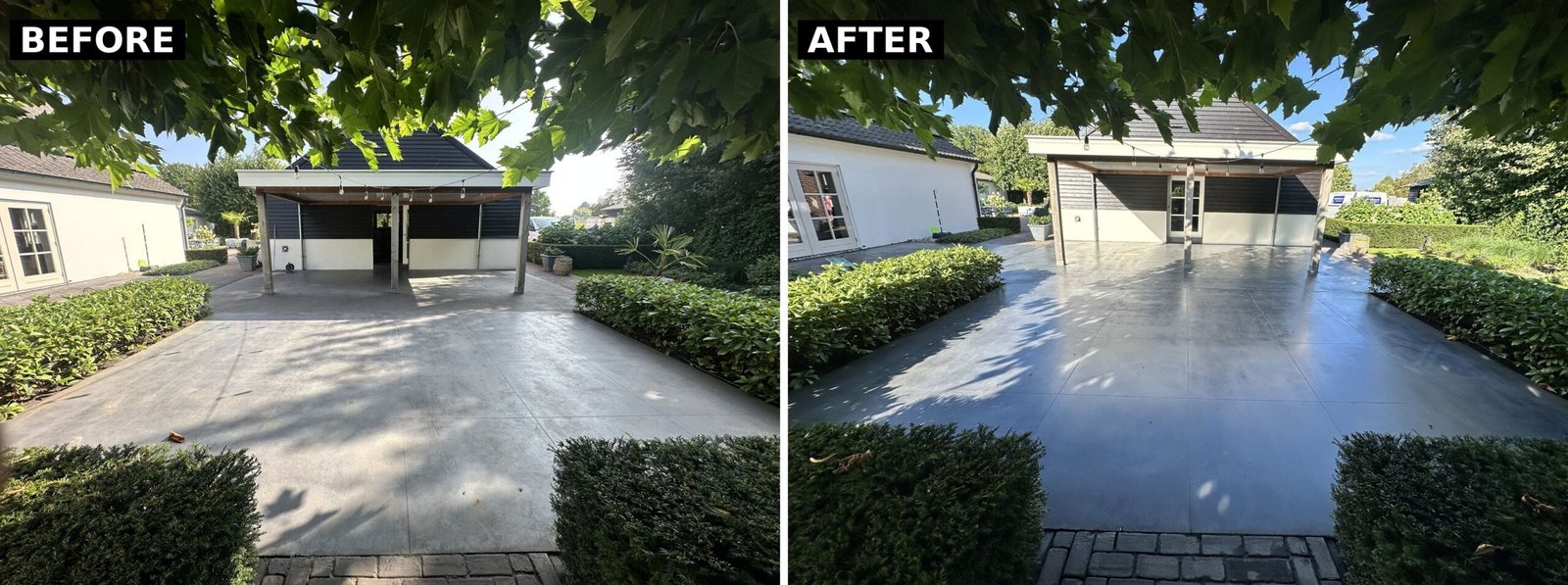
In 2025 we treated a terrace of about 200 m² in Uden, made of concrete coloured all the way through. The family had been using the terrace for several years, and every summer they walked black pigment into the house after walking barefoot on it. They had already tried several methods and different companies to solve the problem, without success. First we cleaned the surface thoroughly and impregnated it twice with decoSIL before we started polishing. Then we polished with #50 and #100, impregnated once more with decoSIL, polished with #200 and applied two thin coats of decoSTAINSTOP. We stopped at #200 on purpose: the higher you polish, the smoother the surface becomes. This way the terrace keeps enough grip, although like any smooth surface it is somewhat more slippery when wet. The pigment no longer comes off, and the owners are happy again.
Does your floor or terrace give off colour?
We advise flooring companies and homeowners on the best approach, and we can also carry out the work ourselves. Every floor is different, so we always start by looking at the concrete and testing a small area. Contact us for advice.
